5 Things Every Behavior Intervention Plan (BIP) Needs
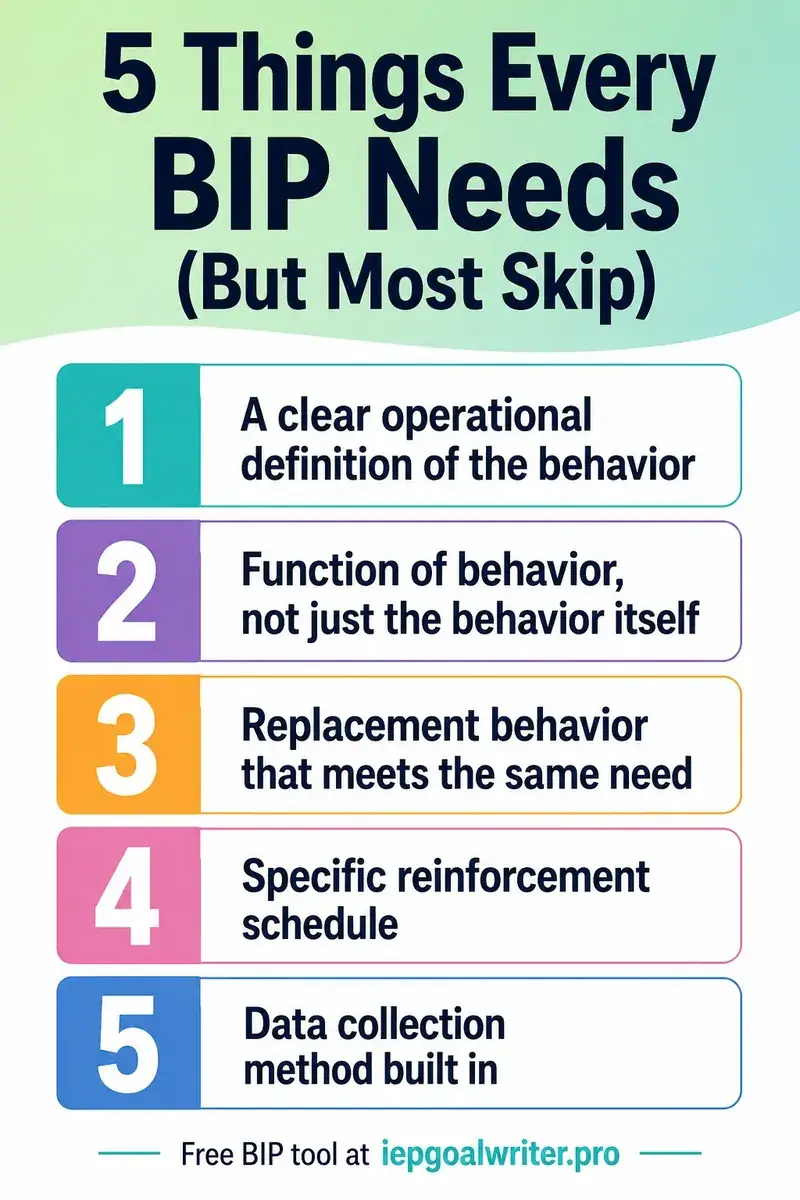
A strong Behavior Intervention Plan needs 5 things: an operational definition of the behavior, the function it serves (not just a description), a replacement behavior that meets the same need, a specific reinforcement plan, and a built-in data collection method — miss one and the BIP is far less likely to actually change behavior.
Most BIPs that fail aren't badly intentioned — they're just missing one of a handful of core components. Before finalizing a plan, run it against this checklist.
1. An operational definition
The target behavior needs to be defined so specifically that two different adults would agree on whether it happened. "Aggressive behavior" isn't operational; "hits, kicks, or throws objects at another person" is. A vague definition means inconsistent data, and inconsistent data means no one can tell if the plan is working.
2. The function of the behavior, not just the behavior
A BIP built only from what the behavior looks like — without knowing why it's happening — is guessing. The function almost always falls into one of four categories: escape/avoidance, attention, access to a tangible, or sensory. This should come from a completed Functional Behavior Assessment, not an assumption made in the BIP meeting itself.
3. A replacement behavior that meets the same need
The plan needs to teach the student something to do instead — one that serves the same function as the original behavior. If a student is running out of the room to escape a hard task (escape function), the replacement can't just be "stay in your seat"; it needs to give the student a functional way to escape appropriately, like a break card.
4. A specific reinforcement plan
The plan should say exactly what happens when the student uses the replacement behavior — not a vague "praise the student." What's the reinforcer, how often, and does it fade over time? If the replacement behavior isn't reinforced more reliably than the original behavior was working for the student, the plan won't compete with the habit it's trying to replace.
5. A data collection method built in
A BIP without a defined way to track frequency, duration, or intensity of the behavior over time is a plan no one can evaluate. Decide upfront who collects data, how often, and using what tool — a simple tally sheet, an interval-recording form, or a digital log — so the team has real evidence to review at the next check-in, not just impressions.
FAQ
Paste your assessment data and generate an IDEA-compliant, individualized goal in seconds.
Try it free →