IEP Medicaid Billing Notes Made Simple
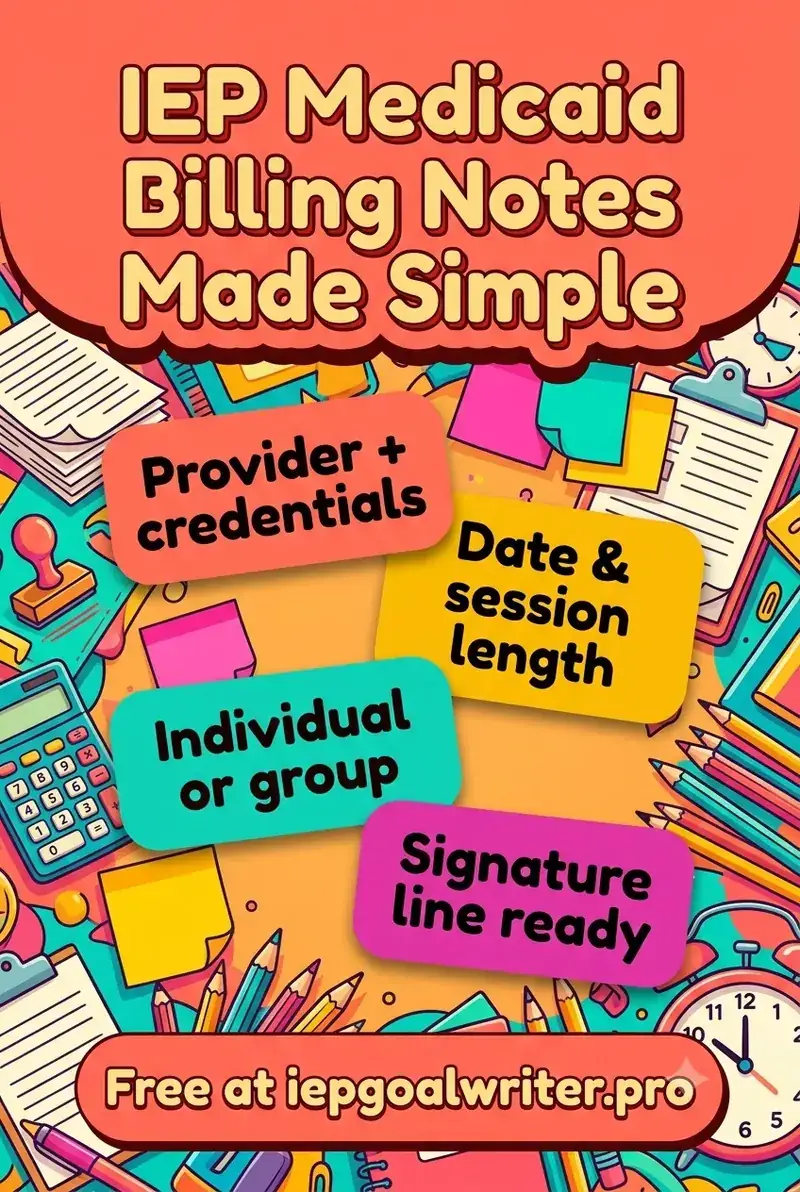
A compliant Medicaid service billing note needs the provider's name and credentials, the exact date and session length, whether the service was individual or group, a description of what was addressed, and a proper signature line. Missing any of these is one of the most common reasons Medicaid billing claims get rejected.
Medicaid billing for school-based services gets rejected for the same handful of missing details over and over. Running every note against this checklist before submission saves significant rework later.
Provider name and credentials
The note needs the full name of the service provider and their professional credentials (e.g., licensed SLP, occupational therapist) clearly stated — not just initials or a signature that doesn't specify the credential type, which is a common rejection reason during an audit.
Exact date and session length
Record the specific date of service and the exact session length in minutes — not a rounded estimate. Billing systems typically require minutes to match the service minutes documented in the IEP, so consistent, precise time tracking matters both for reimbursement and for IEP compliance.
Individual vs. group
State clearly whether the session was delivered one-on-one or in a group, and if group, how many students were present. This affects reimbursement rates and is one of the fields most often left blank or ambiguous on rejected claims.
What was addressed
Briefly describe what IEP goal or skill area the session addressed — this doesn't need to be a full narrative, but it should connect the billed session back to a specific service on the student's IEP, not a generic description that could apply to any session.
Signature and date
The note needs a proper signature (physical or verified electronic) from the provider, dated at or near the time of service — not batch-signed weeks later. Missing or delayed signatures are a frequent, entirely avoidable reason claims get flagged in an audit.
FAQ
Paste your assessment data and generate an IDEA-compliant, individualized goal in seconds.
Try it free →