How to Run an IEP Meeting That Actually Ends On Time
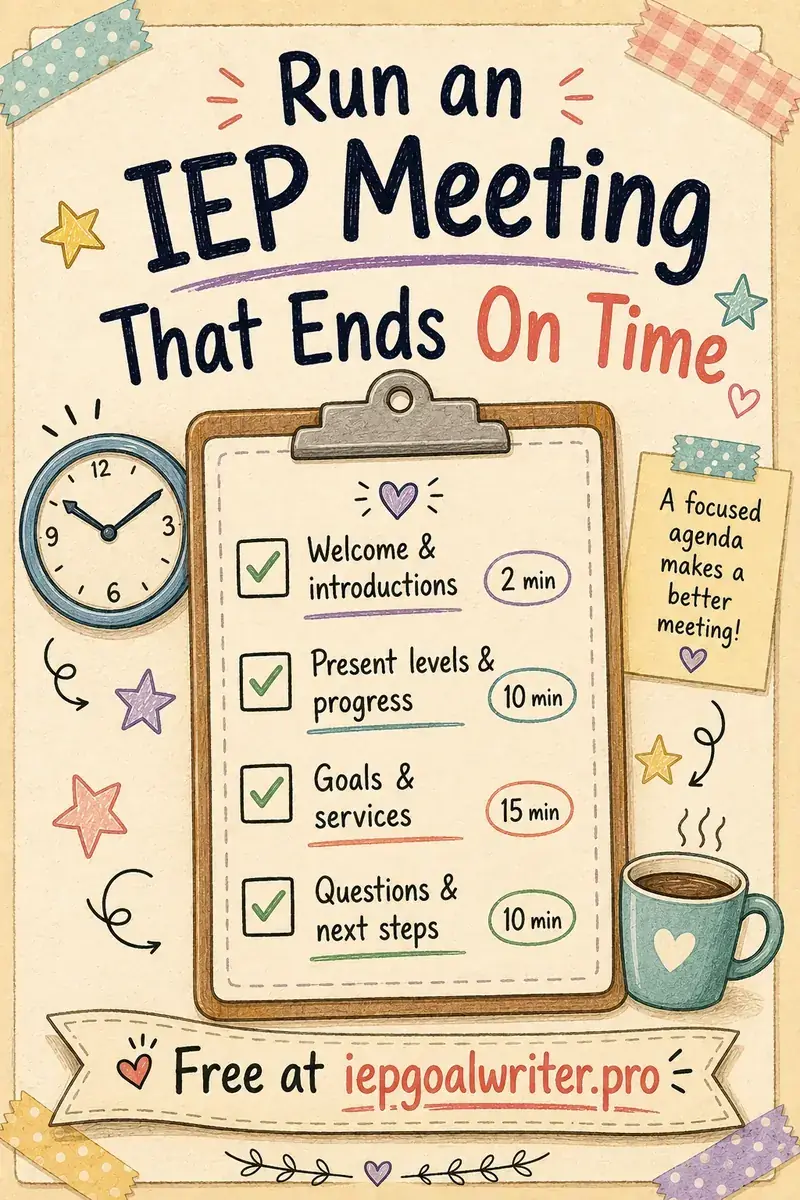
A well-run IEP meeting uses a time-boxed agenda: 2 minutes for welcome and introductions, 10 minutes for present levels and progress, 15 minutes for goals and services, and 10 minutes for questions and next steps. Sharing this structure with families in advance also reduces anxiety about what to expect.
IEP meetings run long for predictable reasons — no shared agenda, no time limits, and present-level review that turns into a re-litigation of the whole year. A simple structure fixes most of it.
Send the agenda in advance
Sharing a simple written agenda with the family a few days before the meeting — even just the four sections and rough timing — does more to keep a meeting on track than anything said in the room. It also reduces family anxiety, since IEP meetings can feel unpredictable and high-stakes for parents who don't do this regularly.
Welcome & introductions (2 minutes)
Keep this genuinely brief — names and roles only. Teams that spend 10-15 minutes on introductions are usually avoiding a harder conversation waiting later in the agenda, whether they realize it or not.
Present levels & progress (10 minutes)
This section should summarize data, not relitigate every incident from the year. Come with the PLAAFP already drafted and progress data already summarized in a format families can follow — a chart or simple table beats reading raw data sheets aloud.
Goals & services (15 minutes)
This is usually the meeting's real work and deserves the most time. Having draft goals prepared in advance (while remaining genuinely open to family input) keeps this section focused on discussion and refinement rather than writing goals from scratch in real time in front of the family.
Questions & next steps (10 minutes)
Reserve real time at the end specifically for family questions — not squeezed in during the goals discussion. End with a clear, spoken summary of what was decided and what happens next, since families often leave IEP meetings unsure what actually changed.
FAQ
Paste your assessment data and generate an IDEA-compliant, individualized goal in seconds.
Try it free →