SDI vs. Accommodation: What's the Difference?
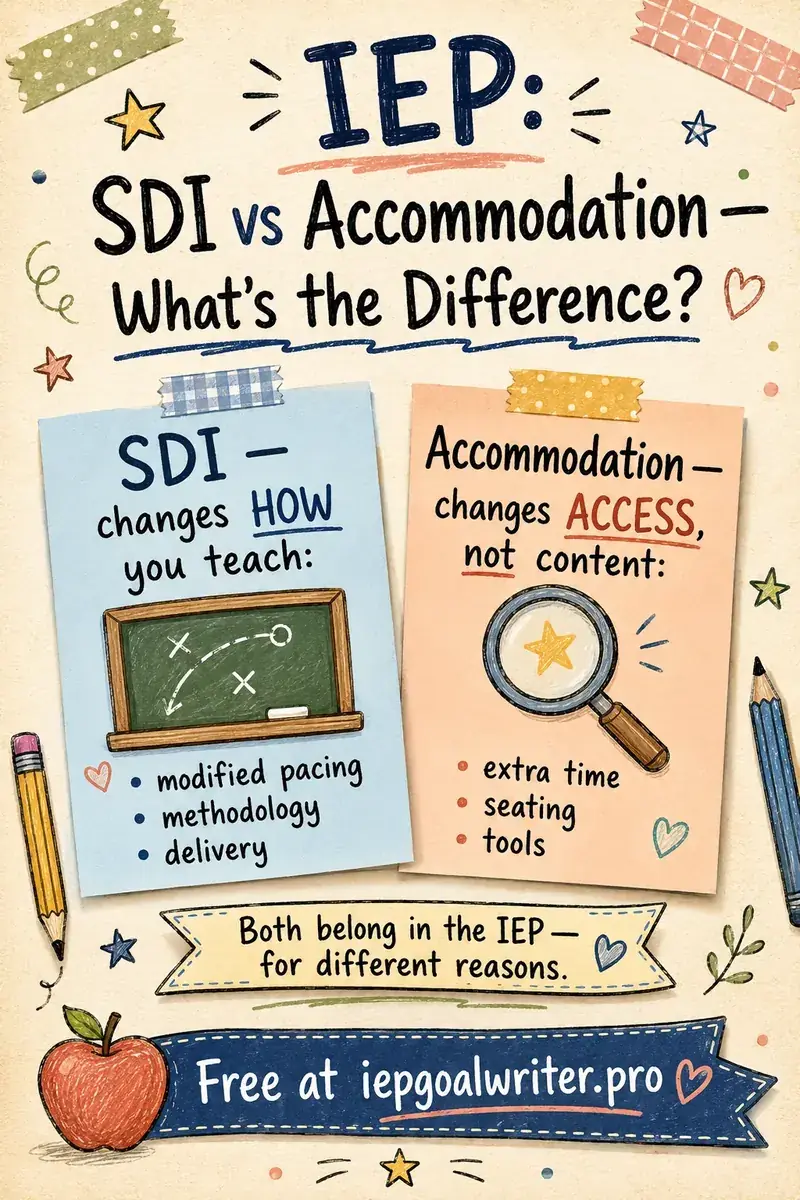
Specially Designed Instruction (SDI) changes how a student is taught — the content, methodology, or delivery of instruction. An accommodation changes access to the same instruction — extra time, preferential seating, or assistive technology — without changing what's being taught. Both belong in an IEP, but they answer different questions and get written differently.
SDI and accommodations get confused constantly, and mixing them up leads to IEPs where the specialized instruction a student actually needs is missing — replaced with a list of access supports that don't address the underlying skill gap.
What counts as SDI
SDI is a change to the content, methodology, or delivery of instruction — not just where or how a student accesses the same lesson. Examples: explicit, systematic phonics instruction using a structured literacy program; breaking multi-step math problems into smaller taught steps with guided practice; or pre-teaching vocabulary before a unit using a specific instructional method. SDI requires specialized teacher training and time built into the schedule — it's not something that happens by simply seating a student closer to the board.
What counts as an accommodation
An accommodation changes access to grade-level content without changing the content itself. Extended time on a test, audiobooks for a novel the class is reading, a calculator for a non-computation math test, or preferential seating are all accommodations — the student is still expected to learn and demonstrate the same content as peers, just with a different path to get there.
Why the distinction matters in the IEP
If a student's core deficit is a specific skill gap (like decoding), accommodations alone won't close it — extended time doesn't teach a student to read, it just gives them more time to attempt a skill they don't yet have. SDI is what's supposed to close the gap; accommodations are what help the student access curriculum while that gap is being closed. An IEP that's all accommodations and no SDI is a common audit flag.
How to write each one correctly
SDI should be described specifically enough that another special education teacher could deliver it — name the instructional approach, frequency, and setting (e.g., "30 minutes daily of small-group structured literacy instruction in the resource room"). Accommodations should be described as the specific support and where/when it applies (e.g., "extended time, time-and-a-half, on all classroom and standardized assessments") — not vague language like "as needed."
FAQ
Paste your assessment data and generate an IDEA-compliant, individualized goal in seconds.
Try it free →