How to Build Your Annual Review Calendar for the Year
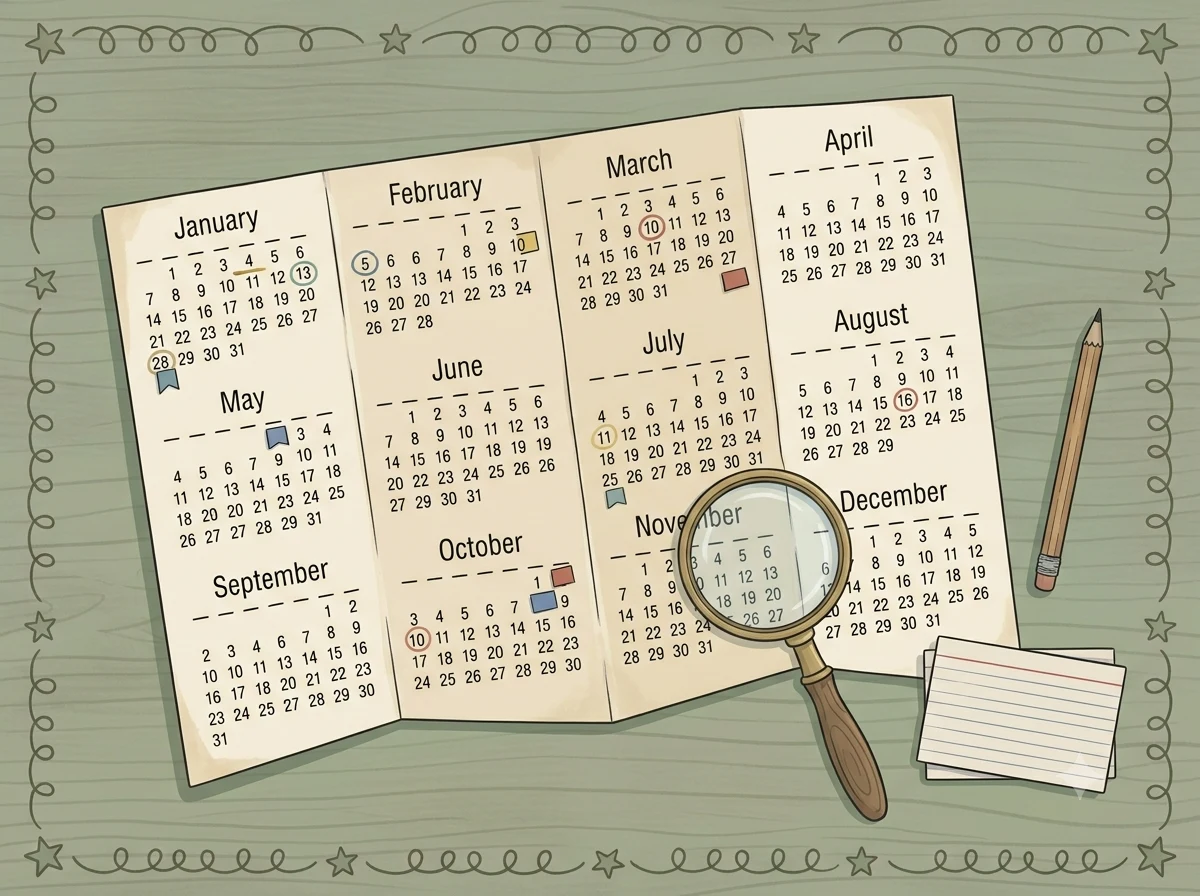
IDEA requires an IEP to be reviewed at least once every 12 months from the date of the last IEP — not on a fixed calendar date — so an annual review calendar should be built from each student's actual last-IEP date, not assumed to follow the school calendar. Mapping every review date across a caseload in the first weeks of school is what catches an early-year review that would otherwise get missed while the team is focused on other start-of-year tasks.
Annual review dates don't reset with the school year — they follow the date of each student's last IEP, which means a caseload can have reviews due anywhere from September through June. Building the full-year calendar early is what keeps that spread from turning into a scramble or a missed deadline.
"Annual" means 12 months from the last IEP, not a school-year date
The 12-month clock runs from the date of the previous IEP, not from the start of the school year or any other fixed date. A student whose last IEP was finalized in October needs their next review by the following October, regardless of when the school year starts or ends — which means some reviews land early in the fall while a case manager is still settling into the year.
Pull every date in the first week, before anything else competes for attention
Go through the full caseload and record each student's exact annual review deadline before the regular rhythm of the year takes over. This is also the moment to flag any review due within the first two months of school specifically — those need scheduling lead time immediately, not once things calm down in October.
Watch for clustering, not just individual deadlines
A caseload built up over several years can end up with reviews bunched in certain months purely by coincidence of when students were originally evaluated. Seeing the full year mapped out at once — rather than one deadline at a time as they come up — is what makes a cluster of five reviews in November visible in September, while there's still time to start scheduling early rather than discovering the pile-up mid-fall.
The 12-month deadline is a ceiling, not a target to aim for
Treating the exact deadline as the scheduling target leaves no room for a rescheduled meeting, a delayed evaluation component, or a family that needs a later date — schools are generally advised to begin scheduling well before the deadline, not right up against it, since a review completed even a few days late is technically a compliance violation regardless of the reason.
Build in evaluation lead time for reviews that include a triennial
A review that coincides with a triennial reevaluation needs meaningfully more lead time than a standard annual review, since testing has to be scheduled and completed before the meeting, not arranged the week of. Flag these specifically on the calendar, separate from standard annual reviews, so they don't get scheduled with the same short runway.
Revisit the calendar after every meeting, not just once in the fall
Each time a review happens, the next year's deadline is set from that new date — so the calendar needs a quick update after every meeting, not just a once-a-year build in September. A calendar built carefully in the first week and never touched again slowly drifts out of accuracy as the year's meetings actually happen.
FAQ
Paste your assessment data and generate an IDEA-compliant, individualized goal in seconds.
Try it free →