Building Related Service Schedules at the Start of the Year
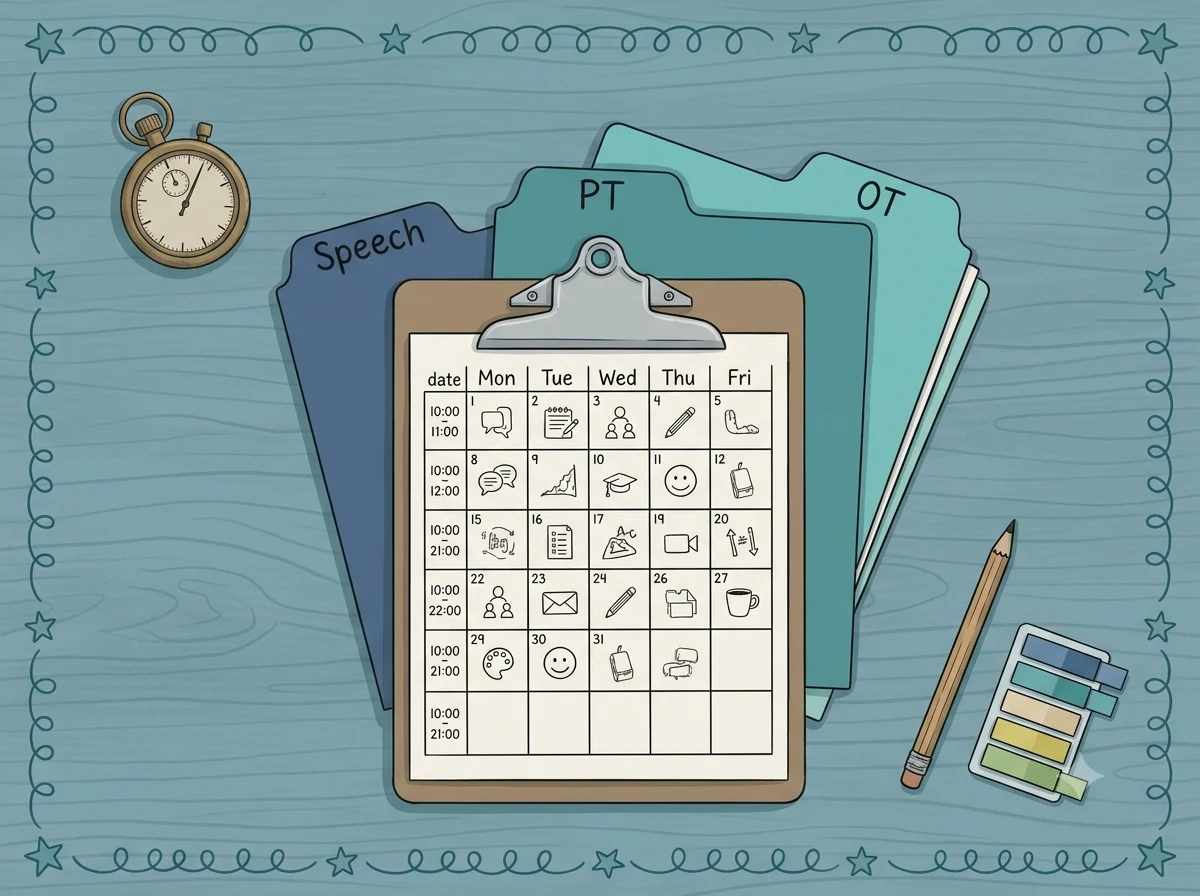
Related service schedules should be built in the first 1-2 weeks of school directly from each IEP's stated frequency and duration, not from whatever slots happen to be open on a provider's calendar. Districts must implement every active IEP as written from day one, so a scheduling conflict has to be resolved by adjusting the schedule around the service minutes — not by quietly delivering less until things settle down.
Related service schedules are one of the first places a school year can quietly fall out of compliance — not through any one bad decision, but through a string of reasonable-sounding delays while the master schedule gets sorted out. The obligation doesn't wait for that to happen.
The IEP's service minutes are the schedule, not a suggestion
A school is required to implement every active IEP as written from the first day of school, regardless of staffing shortages or scheduling delays. That means the starting point for a related-service schedule isn't "where do we have an open slot," it's "what does the IEP say, and how do we build the week around that." When a provider is itinerant and splits time across multiple buildings, this gets harder logistically, but the obligation itself doesn't change.
Build the schedule from the IEP grid, not from memory
Before the first week gets busy, pull the exact frequency and duration language for every student receiving a related service — some IEPs state minutes as a yearly total, some break it out quarterly, and some list monthly minutes for providers who see a student a few times a month. Mixing these up when building the master schedule is a common source of under-delivery that isn't caught until a progress report is due and someone tries to reconcile logged sessions against the IEP and comes up short.
When the master schedule genuinely doesn't fit
If a provider's caseload across buildings can't physically accommodate every student's stated minutes on the days school starts, that's a scheduling problem to escalate immediately, not one to solve by informally reducing minutes and hoping to catch up later. Document the conflict and the interim plan in writing, and loop in whoever manages the master schedule at the administrative level — a quiet under-delivery that surfaces at a progress check is a much bigger problem than a scheduling conflict flagged in week one.
Front-loading services early in the year
For a student who needs extra support settling into new routines, it can be appropriate for the IEP to specify more intensive services early in the year that taper as routines become established — but that has to be written into the IEP itself through the team process, not decided informally by a provider adjusting their own calendar week to week.
Notify providers the moment a schedule is set — not after the first missed session
Once the master schedule is built, related service providers need the actual times in hand before the first week of live sessions, not a general "we'll figure it out." This matters even more for a transfer student arriving with an existing IEP — comparable services are supposed to start immediately, which only actually happens if the provider knows the schedule exists.
Keep session logs from week one, not after the first progress report is due
Documentation of related-service delivery needs to hold up months later when a progress report or an annual review compares logged services against what the IEP promised — many districts require this documentation be kept for several years, so starting a clean log in week one (rather than reconstructing one from memory in October) is worth the five minutes it takes to set up a simple tracking sheet or shared log before the first session happens.
FAQ
Paste your assessment data and generate an IDEA-compliant, individualized goal in seconds.
Try it free →