9 IEP Goals for Anxiety and School Avoidance
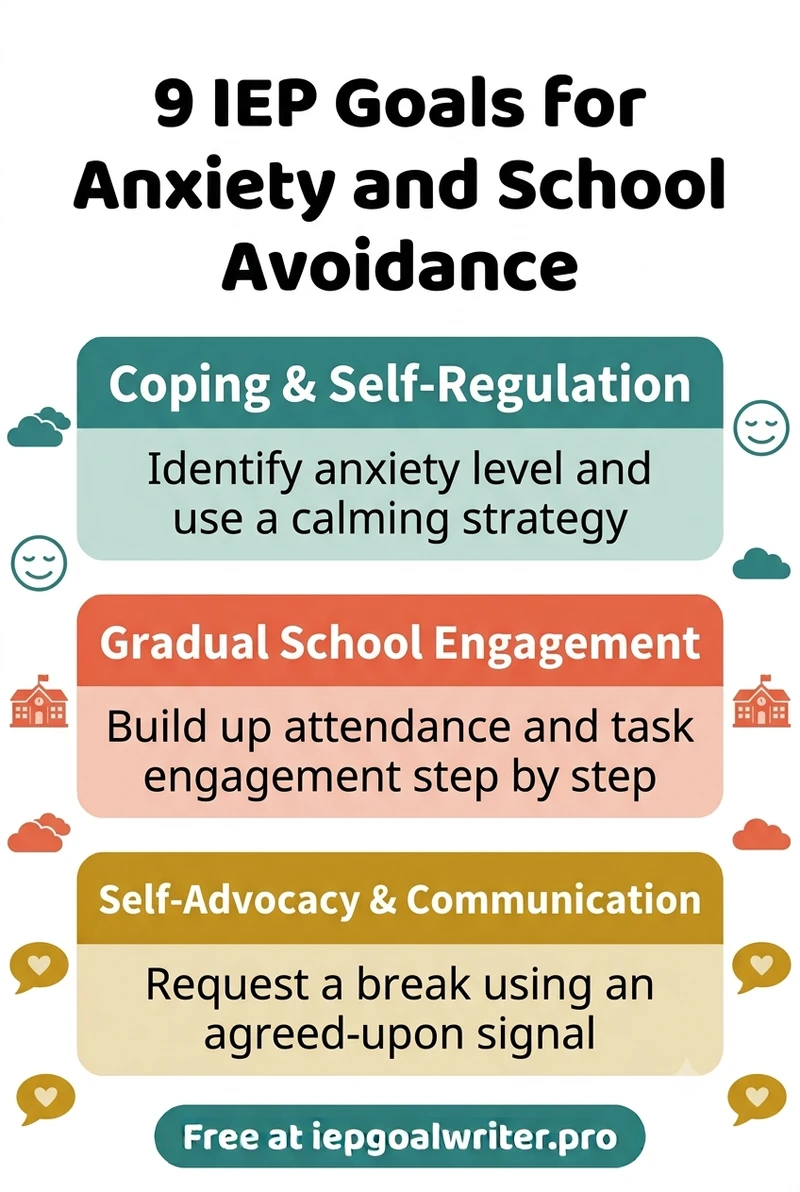
Anxiety isn't its own IDEA eligibility category — a student typically qualifies for an IEP addressing anxiety under Emotional Disturbance or Other Health Impairment, or receives accommodations through a 504 plan instead, depending on whether specially designed instruction is needed. Goals should target coping strategies, gradual school engagement, and self-advocacy rather than trying to eliminate anxiety itself.
Anxiety is one of the most common reasons families search for IEP goals, but it's worth being precise about the legal picture first: anxiety is not a standalone IDEA disability category. A student with anxiety-related needs typically qualifies for an IEP under Emotional Disturbance or Other Health Impairment if the anxiety adversely affects educational performance and requires specially designed instruction — or receives a 504 plan for accommodations alone if it doesn't rise to that level. The goals below assume IEP eligibility has already been established under one of those categories.
Coping & Self-Regulation
- 1.By [date], [student] will independently identify their anxiety level using a rating scale (1-5 or similar) and select an appropriate coping strategy, in 4 of 5 observed opportunities.
- 2.By [date], [student] will use a taught calming strategy (deep breathing, movement break, grounding technique) to return to a task within 5 minutes of becoming visibly anxious, in 3 of 5 instances.
- 3.By [date], [student] will tolerate an unexpected schedule change with a self-regulation strategy and no more than 1 adult prompt, in 4 of 5 observed opportunities.
Gradual School Engagement
- 1.By [date], [student] will attend school for [X] full periods per day for 4 consecutive weeks, as measured by attendance records, working toward a full school day per the re-entry plan.
- 2.By [date], [student] will enter the classroom and begin the first assigned task within 5 minutes of arrival with no more than 1 adult prompt, across 4 of 5 school days.
- 3.By [date], [student] will participate in one non-preferred but required classroom activity (such as a presentation or group task) per week with a pre-planned support strategy in place.
Self-Advocacy & Communication
- 1.By [date], [student] will request a break or use a designated safe space using an agreed-upon signal instead of leaving the classroom without notice, in 4 of 5 observed opportunities.
- 2.By [date], [student] will communicate a specific worry or concern to a trusted adult using a taught format (verbal, written, or check-in card) at least once per week.
Why the Goal Isn't 'Eliminate Anxiety'
A goal written as reducing or eliminating anxiety itself is difficult to measure objectively and isn't really the target of specially designed instruction. Effective goals instead target observable, teachable skills — using a coping strategy, tolerating a specific trigger, re-engaging with a task — that are within the student's and the school's control to teach and measure, while anxiety symptoms themselves may fluctuate for reasons unrelated to the intervention.
FAQ
Paste your assessment data and generate an IDEA-compliant, individualized goal in seconds.
Try it free →